



I’ve always been someone who looks at systems and instinctively wants to improve them.
If something doesn’t quite make sense, feels inefficient, or creates unnecessary friction, I can’t help but start pulling on the thread. I want to understand why it works the way it does, where it breaks down, and how it could be better. I suppose it’s in my nature to look for solutions that help people do their jobs more clearly, efficiently, and with less frustration.
That instinct has shaped a surprising amount of my career, especially in-house.
Because while design is often associated with visuals, campaigns, and polished deliverables, a lot of the most impactful work I’ve been part of doesn’t look like design at all.
It looks like systems.
Designing Intake Is Still Design
One of the clearest examples is intake.
Whether it’s a simple Microsoft Form that plugs into tools like Asana, or native intake workflows inside enterprise-level platforms like Adobe Workfront, the challenge is always the same: how do you get the most relevant information from requestors, using the fewest questions possible?
Too few questions and the team is left guessing.
Too many and people either abandon the form or rush through it with low-quality answers.
Finding that balance takes real work. It’s not something you get right on the first pass.
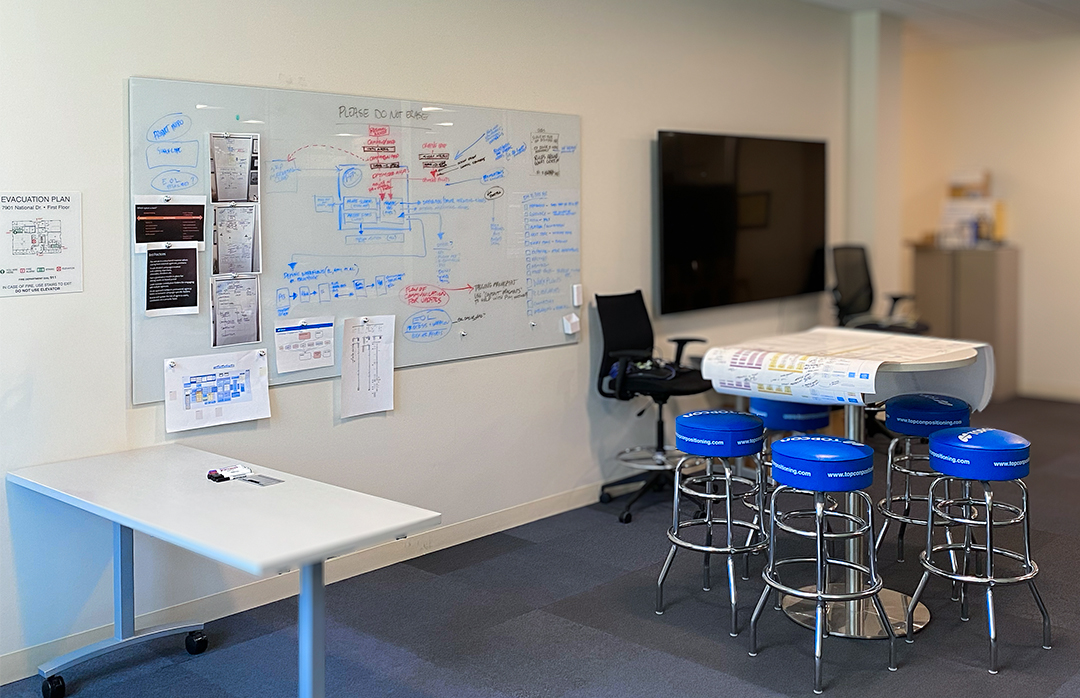
There’s a lot of whiteboarding involved. Workflow charting. Mapping what happens before a request is submitted, what decisions need to be made once it comes in, and what information actually moves the work forward. And it’s never a solo effort.
This kind of work only succeeds when it’s collaborative. Design, operations, sales, corporate communications, marketing leadership, and others all bring a perspective that shapes the final result. Everyone sees a different part of the process, and the intake has to work for all of them.
When it finally clicks, the payoff is huge. Fewer back-and-forth emails. Clearer expectations. Better work produced faster, with less frustration on all sides.
The Less-Sexy Side of Design: DAM
Digital Asset Management is another area where design thinking shows up in less obvious ways.
Let’s be honest, DAM work isn’t particularly glamorous. No one gets excited about metadata schemas at first glance. But for me, there’s something deeply satisfying about bringing structure to complexity.
Large charts and diagrams that map out metadata fields, tagging rules, and asset hierarchies help turn chaos into clarity. Everything gets a place. Everything has a reason for being there.
That structure does more than improve searchability. It shapes behavior.
Once we had clear systems, templates, and governance in place, we noticed a shift. The number of one-off projects dropped. Not because creativity was restricted, but because people finally understood where work belonged and how to approach it. Requests started fitting into existing frameworks instead of reinventing the wheel every time.
As a result, our creative team was able to work more efficiently, with more focus, and with clearer intent behind the work.
The Invisible Work That Makes Everything Else Possible
Most of these projects take months, sometimes years. They’re deeply collaborative and require alignment across many teams. And when they’re done well, they’re almost invisible.
People don’t think about the intake form anymore.
They don’t notice how quickly they can find the right asset.
They just know that things feel easier.
That invisibility can make this work hard to value. It doesn’t live in a portfolio. It doesn’t show up as a single launch moment. But its impact is felt every day in how smoothly teams operate and how much creative energy is preserved.
I’ve come to believe that this kind of work is becoming a core part of modern in-house design roles. Not as a replacement for traditional design, but as a foundation that makes great creative work possible at scale.
Design isn’t only about what we create.
It’s about shaping the systems, tools, and structures that allow people to do their best work, consistently and with purpose.
And sometimes, the most successful projects are the ones no one ever notices at all.



_logo.svg.png)
